1) Contexto
Cada vez más organizadores de eventos comprenden que usar vasos reutilizables no es suficiente para ser sostenibles. La verdadera diferencia está en construir una operativa circular completa, capaz de cerrar el ciclo desde la planificación hasta la reincorporación de cada vaso al sistema.
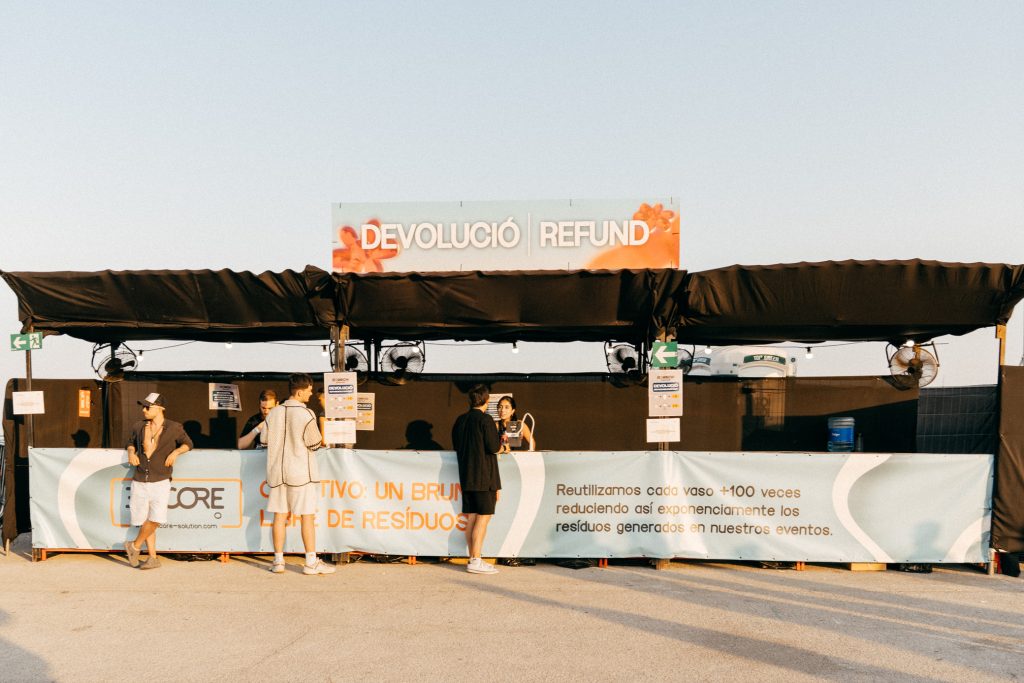
La Solución 360° de ENCORE! va precisamente de eso: de integrar cada fase —consultoría, logística, uso, recogida, lavado y gestión de stock— en una sola cadena operativa coherente, eficiente y medible. Durante 2025, este modelo se implementó en algunos de los eventos más representativos del panorama ibérico: Cruïlla, Brunch Electronik (Barcelona y Brunch Festival), Sónar 2025, los partidos del FC Barcelona en Montjuïc, y varias activaciones de marca con Estrella Damm.
2) Medir la circularidad: mucho más que contar vasos
El impacto real de un sistema de reutilización no se mide por cuántos vasos hay, sino por qué porcentaje logra volver al circuito.
Las operaciones de ENCORE! han superado ampliamente los estándares del sector en cada una de las métricas clave:
- Tasas de recuperación superiores al 70%, frente al promedio sectorial de 35–40%.
- Reducciones de residuos de entre el 60% y el 80% respecto al escenario no circular.
- Y niveles de reincorporación post-lavado cercanos al 95–98%, asegurando una segunda (y tercera) vida útil para la mayoría de los vasos en circulación.
En otras palabras, no se trata solo de reemplazar el plástico, sino de asegurar que ese material circule de nuevo. Ahí es donde la sostenibilidad se convierte en operativa real.
3) Resultados globales 2025
Circularidad en acción: 27 toneladas menos de residuos y 120 MWh de energía ahorrados
Durante la temporada 2025, la implementación de la Solución 360° de ENCORE! permitió evitar más de 27 toneladas de residuos plásticos y ahorrar más de 120.000 kWh de energía.
Estas cifras pueden parecer abstractas, pero su traducción es contundente: equivale al peso de cuatro autobuses urbanos llenos de residuos plásticos y a la energía que consumiría una comunidad de 35 hogares en un año completo.
De media, los eventos alcanzaron un 70% de reducción de residuos respecto al modelo tradicional de vasos de un solo uso, y una disminución del 60% al 85% en el consumo energético, demostrando que la sostenibilidad bien gestionada también significa eficiencia.
4) Resultados por evento
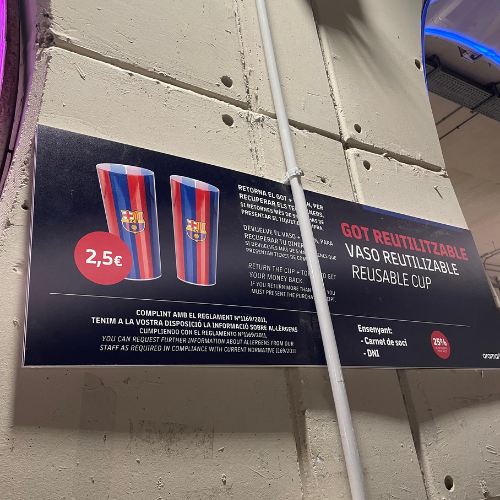
En los partidos del FC Barcelona, la adopción de la Solución 360° logró reducir un 43% los residuos generados y un 46% el consumo energético, manteniendo estándares estables de lavado y logística a lo largo de toda la temporada.
En Sónar 2025, la tasa de recuperación alcanzó el 66%, con un 72% de reducción de residuos y un ahorro energético del 64%. Este caso demuestra cómo una estrategia bien diseñada de puntos de retorno, rutas de recogida y personal operativo puede escalar la circularidad a recintos complejos y multifocales.
Brunch Electronik Festival, repartido entre el Poble Espanyol y el Parc del Fòrum, consiguió una reducción del 69% de residuos y un 83% de ahorro energético. En este evento, la distribución de flujos por recinto fue clave: el Fòrum concentró la mayor parte del volumen, mientras que el Poble Espanyol se consolidó como referencia operativa por su eficacia en la devolución.
En el Festival Cruïlla, la tasa de recuperación alcanzó un 77%, con una reducción del 77% de los residuos y un 84% de ahorro energético. Este evento se destacó por combinar una buena señalización con una operativa reforzada en picos, obteniendo una de las tasas más altas de recuperación del año.
Finalmente, Brunch Electronik Barcelona, con varios eventos a lo largo del primer semestre, mantuvo una media de reducción del 70% de residuos y un 79% de ahorro energético. En formatos de consumo rápido, como chupitos, se evidenció la importancia de ajustar el sistema de retorno y los incentivos para aumentar la participación del público.
5) Lo que aprendimos: claves del éxito operativo
Planificar bien el stock mejora todo el sistema.
Evitar roturas de servicio y mantener un margen de seguridad garantiza continuidad. El excedente reincorporado tras el lavado permite operar con mayor agilidad y reducir producción innecesaria.
La recuperación no ocurre sola: se diseña.
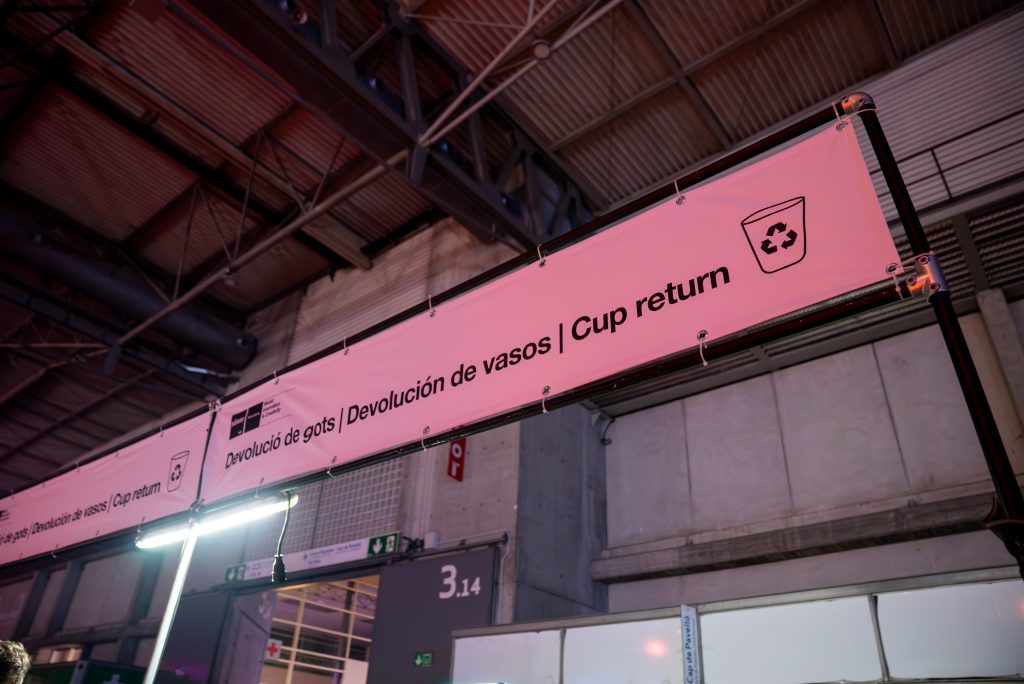
Los mejores resultados provienen de eventos con puntos de retorno estratégicamente distribuidos, rutas de recogida ágiles y comunicación clara. Ajustar la operativa según el flujo del público en cada recinto marca la diferencia.
Control de calidad del lavado = vida útil y ahorro.
Mantener tasas de reincorporación de más del 90% demuestra que la eficiencia puede ir de la mano de la higiene y la trazabilidad, reduciendo la necesidad de producir nuevo material.
Los datos son la base de la credibilidad.
La sostenibilidad no se comunica: se demuestra. Las métricas de ahorro energético y reducción de residuos obtenidas en 2025 constituyen evidencia sólida para reportes ESG y licitaciones públicas, reforzando la posición de los promotores que apuestan por la reutilización.
6) Mirando hacia 2026: pasos para seguir escalando
El aprendizaje de 2025 deja claro que los próximos avances pasan por diseñar experiencias de retorno más intuitivas y por profundizar en la integración entre sostenibilidad y operativa.
Algunas de las líneas de mejora clave incluyen:
- Reforzar la señalización y los puntos de retorno en zonas de alto flujo.
- Priorizar recursos donde se concentra el mayor volumen operativo.
- Reaprovechar stocks lavados en nuevos eventos para reducir costes y plazos.
El objetivo no es solo evitar residuos, sino redefinir la logística del consumo en eventos, haciéndola más circular, más eficiente y más consciente.
7) Conclusión: medir para transformar
Para las áreas de operaciones, compras o sostenibilidad, el valor no reside únicamente en tener vasos reutilizables, sino en demostrar una circularidad real y cuantificable.
En 2025, ENCORE! logró convertir la reutilización en un sistema medible, eficiente y escalable, con resultados que hablan por sí solos:
- Más del 70% de reducción de residuos.
- Hasta 85% de ahorro energético.
- Más del 90% de reincorporación post-lavado.
Eso es lo que define la Solución 360° de ENCORE!: convertir el vaso en un recurso operativo, no en un residuo. Un modelo que no solo impulsa la sostenibilidad, sino que transforma la gestión de los eventos desde dentro.