Índice
- ¿Qué son los vasos reutilizables y en qué se diferencian de los desechables?
- Beneficios ambientales y económicos de usar vasos reutilizables en eventos
- Impacto en la imagen y sostenibilidad de tu evento
- Implementar un sistema de vasos reutilizables: ¿qué implica?
- Conclusión y próximo paso
1. ¿Qué son los vasos reutilizables y en qué se diferencian de los desechables?
Los vasos reutilizables son recipientes diseñados para usarse muchas veces, a diferencia de los vasos desechables de un solo uso. Por lo general están fabricados con materiales duraderos como el polipropileno (PP), un plástico resistente, libre de cloro y 100% reciclable
Esto les permite aguantar múltiples usos sin romperse ni deformarse, incluso con lavados a altas temperaturas
Al terminar su vida útil (tras decenas o cientos de reutilizaciones), estos vasos pueden reciclarse triturándolos para fabricar nuevos productos, cerrando así el ciclo
En cambio, un vaso desechable típico (ya sea de plástico fino o de cartón plastificado) tiene una vida útil mínima: se utiliza unos minutos y se tira. Cada uno de esos vasos de un solo uso conlleva consumo de recursos naturales para fabricarlo, transporte y finalmente gestión como residuo, lo que supone un gran impacto ambiental para tan solo unos sorbos de bebida
En resumen, un vaso reutilizable equivale a decenas de vasos desechables. Su mayor peso y coste inicial vienen acompañados de una larga vida de servicio. Mientras un vaso desechable termina en la basura tras un uso, un vaso reutilizable se lava y vuelve a usarse una y otra vez, evitando tener que producir y desechar otro vaso para cada bebida
Esta diferencia fundamental – reutilización vs. un solo uso – es la clave para reducir residuos en eventos. En las secciones siguientes veremos cómo esta simple idea conlleva importantes beneficios ambientales, económicos y de imagen para tu evento.
2. Beneficios ambientales y económicos de usar vasos reutilizables en eventos
Adoptar vasos reutilizables en lugar de desechables ofrece ventajas concretas tanto para el medio ambiente como para las finanzas de tu evento. Veamos cada aspecto:
Beneficios ambientales:
La reducción de residuos es el impacto más inmediato. Estudios señalan que sustituir los vasos de un solo uso por reutilizables podría evitar hasta un 80% de los residuos plásticos generados durante un evento
Pensemos en un festival típico: en un concierto con 50.000 asistentes se pueden llegar a tirar más de 500.000 vasos de plástico de un solo uso – ¡medio millón de vasos para un solo evento!
Esa montaña de desechos plásticos, que suele acabar dispersa por el suelo, se elimina casi por completo con un sistema de vasos reutilizables. De hecho, experiencias piloto han logrado reducir hasta un 90% el littering (basura tirada) en eventos al implantar vasos retornables
Menos residuos en el suelo significa menos contaminación de suelos y mares, y también menos materiales plásticos nuevos que producir.
Además, los vasos reutilizables ayudan a disminuir la huella de carbono del evento. Aunque fabricar un vaso reutilizable requiere más material y energía que uno desechable, al usarse muchas veces su impacto por uso es mucho menor. Las emisiones de CO₂ y el consumo de energía asociados al transporte y producción de vasos se reducen drásticamente cuando se adopta la reutilización
Un análisis de ciclo de vida reciente comparó distintas opciones y concluyó que los vasos reutilizables (de PP o incluso acero inoxidable) “superan en sostenibilidad a los vasos de un solo uso en todos los indicadores ambientales” upstream.com
Por ejemplo, un estadio que utiliza 5,4 millones de vasos desechables al año genera unas 63,7 toneladas de residuos plásticos; si esos vasos se sustituyen por vasos de polipropileno reutilizables usados 300 veces, los residuos totales se reducen a menos de 1 tonelada
La diferencia es abrumadora: la reutilización “gana por el medio ambiente siempre” como resume el CEO de Upstream
Beneficios económicos:
Más allá de la sostenibilidad, los vasos reutilizables también pueden suponer ahorros y ventajas económicas. Aunque cada vaso reutilizable tiene un coste unitario mayor que uno desechable, la inversión se amortiza rápidamente. Desde la segunda utilización ya estás ahorrando, y a lo largo de su vida útil cada vaso reutilizable evita la compra de decenas de vasos desechables, lo que pronto se traduce en rentabilidad
En otras palabras, en vez de gastar continuamente en miles de vasos de usar y tirar para cada evento, adquieres un stock de vasos robustos que te sirven para evento tras evento.
También hay ahorros en gestión de residuos y limpieza. Menos residuos generados significa menos personal y horas dedicadas a la limpieza post-evento , y menos gastos en bolsas, contenedores y tasas de recogida de basura. Piensa de nuevo en ese festival de 50.000 personas: los montones de vasos por el suelo implican un mayor coste de limpieza y una experiencia menos agradable para el público
Con vasos reutilizables, el recinto permanece mucho más limpio durante y después del evento, permitiendo reducir el equipo de limpieza necesario o destinarlo a otras tareas. Un entorno limpio no solo ahorra dinero sino que prolonga la vida útil del espacio y evita gastos por daños o suciedad excesiva.
Otro aspecto económico es la posibilidad de implementar un sistema de depósito. En la práctica común, al asistente se le cobra una pequeña fianza (por ejemplo 1 €) por su vaso reutilizable al pedir su primera consumición, importe que puede recuperar al devolver el vaso. Muchos eventos reportan que una parte del público opta por quedarse el vaso de recuerdo, lo que en la práctica se traduce en ingresos extra (al no reclamarse algunas fianzas). Por supuesto, el objetivo no es lucrarse indebidamente, y la normativa en España exige ofrecer la devolución del depósito
Pero incluso cumpliendo con ello, el sistema suele equilibrar o cubrir el coste de adquisición y lavado de los vasos. En festivales y conciertos, el público ya asume como normal pagar un depósito por el vaso – de hecho, “el vaso reutilizable se ha afianzado como un gasto más que debe asumir el público si quiere asistir a un festival”
Esto significa que el organizador no carga en solitario con la inversión en vasos, a diferencia del modelo anterior donde compraba vasos desechables que luego regalaba y limpiaba del suelo.
Finalmente, adoptar vasos reutilizables te ayuda a evitar costes regulatorios y sanciones. Tanto España como Portugal están endureciendo las medidas contra los plásticos de un solo uso. En España, la nueva Ley de Residuos impone desde 2023 un impuesto de 0,45 € por kilo de envases plásticos no reutilizables y prohíbe entregar vasos de plástico gratis (hay que cobrarlos en ticket). Además, exige reducir un 50% el consumo de vasos de usar y tirar en 2026 (respecto a 2022) y un 70% para 2030
En Portugal, ciudades como Lisboa ya prohíben servir bebidas en vasos plásticos desechables, con multas de hasta 15.000 € para los negocios que incumplan
Claramente, la dirección que marcan las leyes es la reutilización. Implementarla desde ya te libra de futuros impuestos y te asegura cumplir con la normativa vigente, evitando multas o contratiempos legales. En suma, los vasos reutilizables hacen “un evento más sostenible y más rentable”
3. Impacto en la imagen y sostenibilidad de tu evento
Adoptar vasos reutilizables no solo aporta beneficios tangibles; también envía un poderoso mensaje sobre tu evento. En la industria actual, la imagen y la sostenibilidad van de la mano: público, patrocinadores y autoridades valoran cada vez más los eventos responsables con el medio ambiente.
Un recinto sin basura plástica es inmediatamente percibido como un espacio más cuidado, seguro y de calidad. Un festival sin montañas de vasos tirados transmite una imagen más limpia y sostenible, algo que el público agradece y valora cada vez más. Contrasta esto con las fotos virales de campos de festival cubiertos de residuos: esas escenas dañan la reputación de cualquier organización.
En cambio, si tus asistentes ven que apuestas por vasos reutilizables (y por lo tanto, ven el suelo limpio en todo momento), asociarán tu evento con organización impecable, innovación y respeto ambiental. Crearás una experiencia más agradable: nadie quiere bailar entre basura. Así, mejoras directamente la satisfacción del asistente, lo que puede traducirse en mayor fidelidad y recomendaciones positivas.
Implementar medidas sostenibles también potencia la marca y el prestigio de tu evento. Usar vasos reutilizables es una muestra clara de compromiso medioambiental y responsabilidad social por parte de la organización.
Este gesto habla de tus valores sin necesidad de palabras, demostrando que te tomas en serio la reducción de residuos y la protección del entorno. Muchas empresas patrocinadoras y administraciones públicas prefieren asociarse con eventos verdes; al adoptar vasos reutilizables te vuelves un socio más atractivo para ellos. Incluso podrías obtener reconocimientos o certificaciones de evento sostenible, lo que a su vez es una excelente herramienta de marketing.
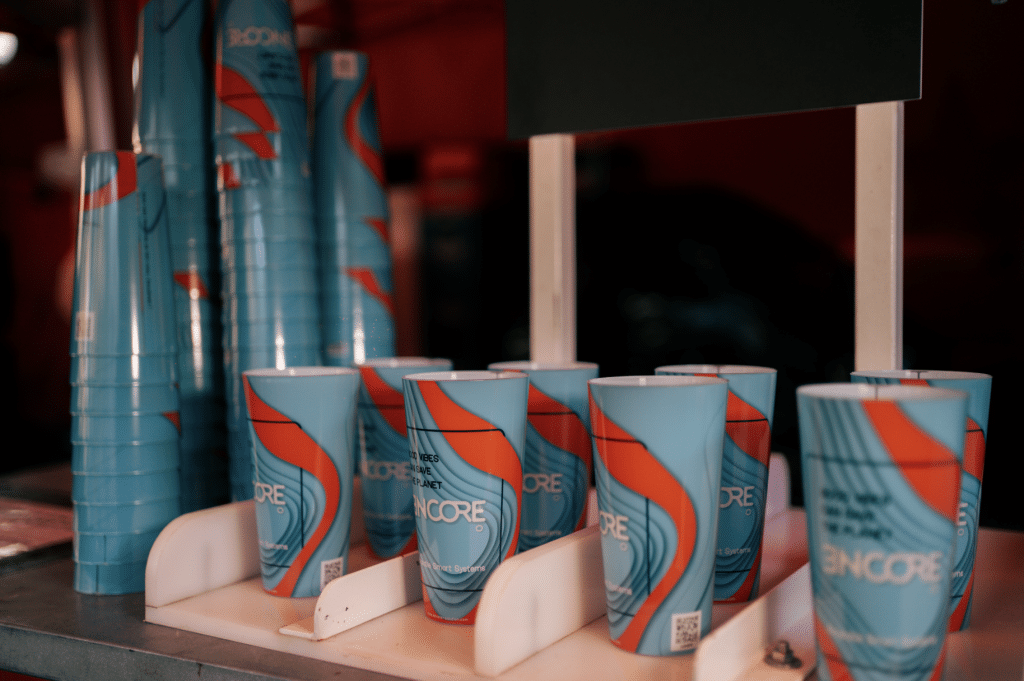
No olvidemos el impacto publicitario: los vasos reutilizables son personalizables con logos, lemas o diseños exclusivos de tu evento. En lugar de un vaso genérico que acaba en la basura, entregas un soporte promocional que la gente lleva en la mano durante todo el evento e incluso se lleva a casa de recuerdo. Cada foto que suban los asistentes brindando con sus vasos llevará tu marca. Es publicidad gratuita y un recuerdo positivo asociado a la experiencia. Según proveedores del sector, estos vasos son un “magnífico vehículo publicitario” además de ecológico.
En definitiva, mejoras tu imagen de marca y difusión mientras reduces residuos: una combinación ganadora.
Por último, al ser pionero en sostenibilidad, tu evento se posiciona por delante de la curva regulatoria. Como mencionamos, la normativa ya obliga a implantar alternativas al plástico de un solo uso en festivales y eventos culturales.
Al actuar proactivamente, te presentas como un líder en sostenibilidad en lugar de alguien que cumple a regañadientes. Esto refuerza la confianza de asistentes y colaboradores. Vivimos en una era donde la conciencia ecológica está en auge; integrar los vasos reutilizables ahora proyecta la imagen de un evento moderno, responsable y comprometido con el futuro. Esa percepción positiva puede marcar la diferencia a la hora de vender entradas o atraer patrocinadores en un mercado competitivo.
4. Implementar un sistema de vasos reutilizables: ¿qué implica?
Adoptar vasos reutilizables en tu evento requiere planificación y algunas adaptaciones logísticas, pero es totalmente viable con el socio adecuado. A continuación, desglosamos qué implica poner en marcha un sistema de reutilización y las buenas prácticas para que funcione correctamente:
- Adquisición o alquiler de vasos: Primero, necesitas obtener un stock suficiente de vasos reutilizables. Puedes comprarlos (personalizados con tu logo) o alquilarlos a empresas especializadas. La cantidad debe cubrir la demanda del evento (tip: suele calcularse 3 vasos por asistente, más un porcentaje extra de respaldo). En ENCORE! ofrecemos vasos de distintos tamaños para cerveza, refrescos, combinados, etc., y puedes personalizarlos en serigrafía o IML con tu imagen corporativa.
- Sistema de depósito/fianza: Implementar un sistema de depósito retornable es clave para asegurar que los vasos vuelvan y se reutilicen. Lo habitual es cobrar un importe (1 €) por el vaso en el momento de servir la primera bebida, importe que se reembolsa si el asistente devuelve el vaso al final. Así, incentivamos al público a no tirarlo ni abandonarlo. Comunica claramente este sistema: carteles en barra y anuncios pueden explicar “Vaso reutilizable: 1€ de depósito, reembolsable al devolverlo”. Algunos eventos permiten intercambiar un vaso sucio por uno limpio en cada consumición para comodidad del usuario. Un ejemplo cercano lo tenemos en los festivales del Brunch Electronik, donde cualquier persona puede adquirir un vaso pagando 1 € de fianza y usarlo cuantas veces quiera; si desea recuperar su euro o cambiar el vaso por otro limpio, acude a un punto designado donde se higienizan los vasos y se devuelve la fianza. Esta mecánica simple mantiene los vasos circulando y asegura su reutilización efectiva.
- Recogida y limpieza: Debes prever cómo recolectarás y limpiarás los vasos usados durante y después del evento. Muchas organizaciones habilitan contenedores o mostradores de devolución donde el público entrega sus vasos para el reembolso. Desde ahí, el equipo operativo recoge los vasos y los lleva a lavar. La limpieza puede realizarse in situ (con lavavajillas industriales móviles) en eventos de varios días, o posteriormente en una planta de lavado especializada si es un evento corto. Lo importante es garantizar una higiene impecable: los vasos deben lavarse con procesos profesionales para eliminar bacterias, y secarse adecuadamente. Empresas especializadas como nosotros, nos encargamos de este proceso integral: “suministramos los vasos, recogemos los usados y, tras ser lavados e higienizados, les damos nuevas vidas distribuyéndolos en posteriores eventos”. En otras palabras, ofrecemos un servicio 360º que incluye la logística de entrega, recogida y lavado, para que tú no tengas que preocuparte por esos detalles operativos.
- Logística e inventario: Al implementar vasos reutilizables, conviene asignar personal para gestionar el flujo de vasos. Desde el personal de barra (que cobra la fianza y entrega el vaso) hasta el personal de limpieza/recogida (que junta vasos abandonados) y el equipo de lavado, todos deben estar coordinados. Es útil llevar un conteo de vasos: cuántos entran en circulación, cuántos se devuelven, cuántos quedan sin retornar. Esto te permitirá calcular pérdidas o sobrantes. En muchos casos, se produce algún nivel de “pérdida” (vasos no devueltos porque la gente se los queda). Lo normal es un porcentaje bajo, por ejemplo 5-10%. Ten vasos extra por si acaso para no quedarte sin stock en mitad del evento (aunque cuidado con sobreestimar demasiado: producir cientos de miles de vasos que luego no uses es también un despilfarro). Algunos grandes festivales con 150.000 asistentes han fabricado 400.000 vasos por precaución, quedándoles miles sin usar – un exceso que conviene evitar con una buena planificación.
- Comunicación y concienciación: Asegura que el público entienda el porqué y el cómo del sistema. Puedes apoyarte con anuncios, redes sociales, cartelería en el evento y formación al staff. Mensajes como “Este evento es libre de plásticos de un solo uso. ¡Devuelve tu vaso y ayuda a reciclarlo para la próxima edición!” funcionan bien. Algunos proveedores incluso preparan notas de prensa y materiales informativos junto con la organización para visibilizar la iniciativa. Esto educa al asistente (muchos apreciarán saber que con su gesto están evitando residuos) y al mismo tiempo refuerza la imagen positiva del evento. También, comunica claramente dónde devolver los vasos para recuperar la fianza, para que nadie se frustre buscándolo.
- Cumplimiento normativo: Como parte de la implementación, infórmate de la regulación vigente. En España, por ejemplo, si cobras por el vaso reutilizable debes ofrecer la devolución del importe al público que lo solicite (es obligatorio desde 2023). Asegúrate de cumplir con esto para evitar infracciones. Asimismo, cerciórate de que los vasos que uses sean efectivamente reutilizables (de suficiente calidad) y estén libres de BPA u otras sustancias prohibidas para contacto alimentario. Trabajar con un proveedor experimentado te dará la tranquilidad de que todo el proceso se alinea con la legislación sanitaria y ambiental.
En síntesis, implementar un sistema de vasos reutilizables implica gestionar un circuito cerrado: compras (o rentas) vasos duraderos, los distribuyes con depósito, los recuperas tras su uso, los lavas y los dejas listos para el siguiente evento. Este ciclo puede repetirse muchas veces con los mismos vasos, logrando el objetivo de reutilización. Es fundamental diseñar bien la logística para que los vasos se reutilicen al máximo. Los expertos estiman que un vaso de PP debe usarse al menos 10 veces para compensar su huella respecto a 10 vasos de un solo uso.
Con las estrategias descritas (depósito, facilidades de retorno, buen lavado), alcanzar y superar esas 10 reutilizaciones es perfectamente posible – de hecho, hay vasos circulando con 50+ usos. La clave es la colaboración con un socio especializado y una buena comunicación al público. Así, el cambio a vasos reutilizables se realiza de forma fluida, eficiente y con resultados positivos desde el primer evento.
5. Conclusión y próximos pasos
En conclusión, los vasos reutilizables representan una solución sostenible, económica y estratégica para los eventos modernos. Hemos visto que, frente al modelo tradicional de usar y tirar, la reutilización aporta beneficios ambientales contundentes (menos residuos, menos emisiones), ahorros y eficiencias operativas (menos costes en limpieza y compras continuas) y un mejor posicionamiento para tu evento (imagen verde, cumplimiento normativo, valor añadido para patrocinadores y público). Lejos de ser una tendencia pasajera, esta práctica se está convirtiendo en la nueva norma en España, Portugal y toda Europa, impulsada tanto por la conciencia ecológica como por exigencias legales. Adoptarla desde la fase de diseño de tu evento te permitirá adelantarte a los cambios y recoger los frutos en forma de un evento más limpio, bien valorado y económicamente inteligente.
Por supuesto, cada evento tiene sus particularidades. La implementación exitosa de un sistema de vasos reutilizables requiere adaptar las recomendaciones a tu caso concreto: tipo de evento, aforo, infraestructura disponible, etc. En ENCORE!, contamos con una amplia experiencia ayudando a organizadores en España y Portugal a dar este paso con confianza y resultados comprobados. Nuestro equipo experto te asesora en todo, desde la planificación logística hasta el diseño personalizado de los vasos, asegurando que tu transición hacia un evento zero waste sea sencilla y efectiva.
¿Listo para dar el siguiente paso hacia la sostenibilidad en tu evento? Te invitamos a contactarnos para una asesoría o un presupuesto personalizado sin compromiso. Estaremos encantados de analizar tus necesidades y ofrecerte una solución integral de vasos reutilizables que se alinee con tus objetivos operativos y de sostenibilidad. Juntos podemos lograr que tu próximo evento no solo sea un éxito en convocatoria, sino también un referente verde en el sector. ¡Hablemos y hagamos realidad un evento más responsable con el planeta!
¿Tienes dudas o quieres saber más? Escríbenos hoy mismo y empecemos a planificar una experiencia sostenible inolvidable para tus asistentes. ¡El cambio está en tus manos (y en tus vasos)! 🍃